


Majlis Obscura and Camerae Obscurae (2025) by Issam Kourbaj
The artist explores the dual meaning of Al Ain in Arabic—as both “eye” and “spring.” Inspired by Ibn al-Haytham, the father of optics and the camera obscura, the artist has introduced Majlis Obscura in Al Qattara Oasis, along with a connected series, the Camerae Obscurae, across the city of Al Ain (In Al Ain Museum and Al Hili Archeological Park.) In this new body of work, the device becomes more than a tool of vision—it transforms into a vessel of memory, inviting us to pause, reflect, and reorient our gaze.
Sites: Al Ain Museum, Al Hili Archeological Park, and Al Qattara Oasis
“It’s an honor to be part of Abu Dhabi Art’s Al Ain commission — to witness a land where light remembers and ancient towers stand as witnesses. Through the lens of the camera obscura, I explore نْيَعلا as both eye and spring, revealing the delicate interplay between perception, place, and time. I look forward to walking alongside the Al Ain community and offering a reading of this remarkable place — like a spring, ever alive.” - Issam Kourbaj

Market Square (2025) by Nike Davies-Okundaye
Two-panel installation, adire on cotton
This commission links the two cities, Osogbo and Al Ain, through their shared histories of palm cultivation and the sustaining presence of water. In Al Ain Oasis, date palms have flourished for millennia, supported by the falaj irrigation system; in Osogbo, Nigeria, palm farming and the nearby Osun River continue to shape economic, spiritual, and cultural life. The scale and format recall the backdrops of Yoruba traveling theatre, used in the 1950s as ephemeral props for roaming public performances. This theatrical tradition was central to cultural life in Osogbo, where Nike’s artistic career began and where the Osogbo Art Movement emerged.
The work is installed inside a structure inspired by the traditional arish, historically used across the Gulf for seasonal shelter. In Market Square, Nike Davies-Okundaye creates a textile environment that connects places, histories, and traditions across continents.
Site: Al Ain Oasis
"I’m so happy to be invited to create an installation at Al Ain Oasis. Being there last year was such a beautiful experience, and I’m excited to return this year and share more of our African culture and stories. Art connects people, and I’m grateful for this chance to keep building that connection through creativity and tradition. This opportunity shows us how deeply connected we all are through creativity, culture and tradition.” - Nike Davies-Okundaye
Luminous Shadow (2025) by Ramin Haerizadeh, Rokni Haerizadeh, and Hesam Rahmanian In collaboration with Bhakta Gaha
Mixed media: 3D Print, handcrafted steel fabrication and painting
The Abu Dhabi–based artists have conceived a sculpture at Al Hili Archaeological Park, inspired by a phrase from the Andalusian mystic Ibn Arabi. The work transforms his words into intertwined letters that hover in space — a poetic fusion of language, form, and imagination.
In the practice of the artists, production is performance, and performance is a collective action leading to dance, art, and architecture. Their work explores models of collaboration, often involving artists and individuals from diverse backgrounds, resulting in a self-sustaining creative ecosystem. Their Abu Dhabi home has been an ongoing project, which serves as studio, stage, library, and research space—reflecting a practice that is at once individual and communal, aesthetic and critical, humorous and poetic.
Site: Al Hili Archeological Park
"We are honored to be participating in this edition of Artists Commissions in Cultural Sites by Abu Dhabi Art, a moment that allows us to bring our work into dialogue with such an ancient and significant site like Al Hili Archeological Park.” - Ramin Haerizadeh, Rokni Haerizadeh, and Hesam Rahmanian
Artists
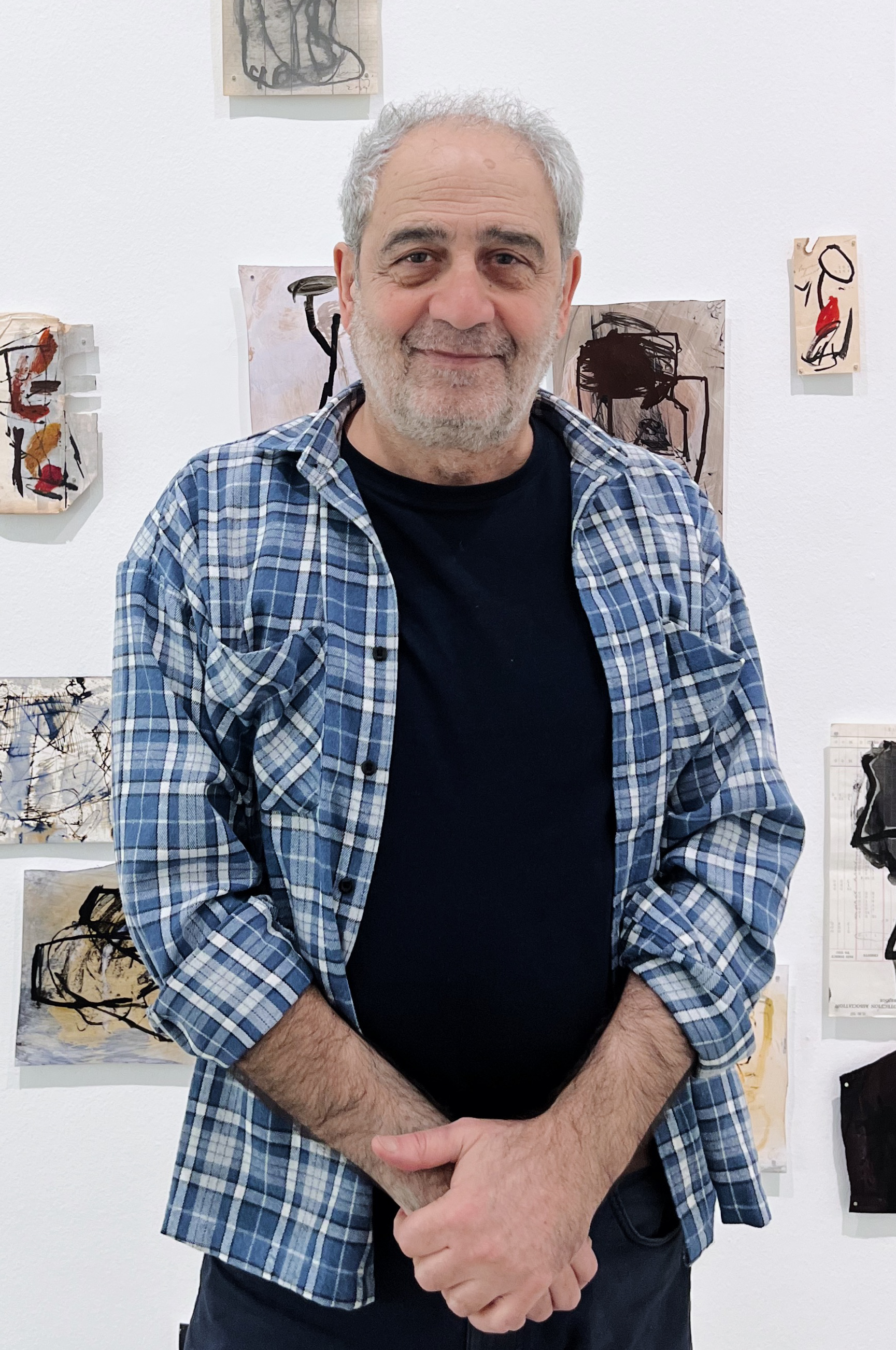
Issam Kourbaj
Artist, Artists Commissions in Cultural Sites 2025
Issam Kourbaj
Artist, Artists Commissions in Cultural Sites 2025

Nike Davies-Okundaye
Artist, Artists Commissions in Cultural Sites 2025
Nike Davies-Okundaye
Artist, Artists Commissions in Cultural Sites 2025

Ramin Haerizadeh, Rokni Haerizadeh, and Hesam Rahmanian
Artists, Artists Commissions in Cultural Sites 2025
Ramin Haerizadeh, Rokni Haerizadeh, and Hesam Rahmanian
Artists, Artists Commissions in Cultural Sites 2025